Top 10 Mud Brick Making Machine Companies in 2026
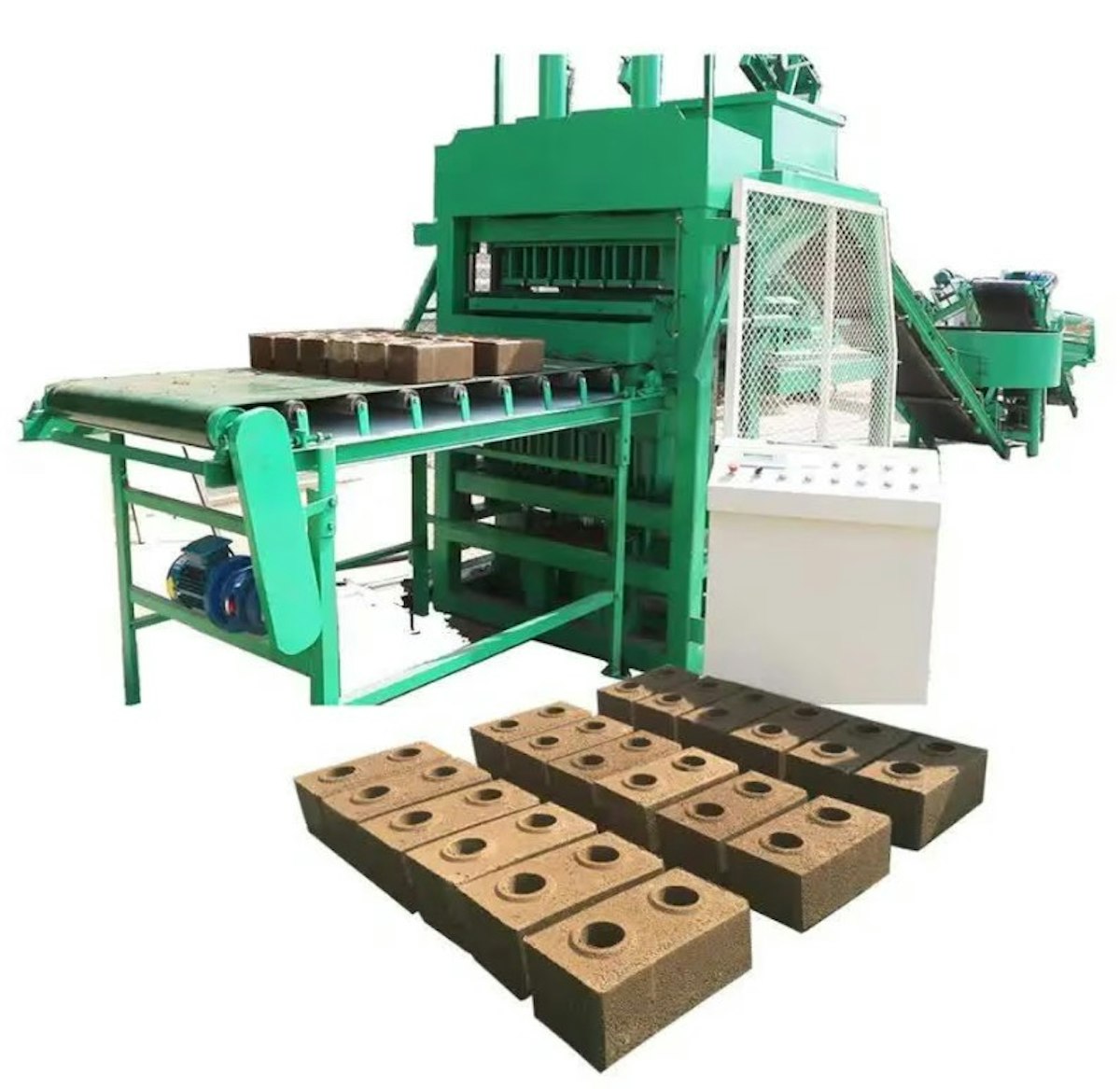
Across Africa, South Asia, and Latin America, earth-based construction is experiencing a genuine revival. Architects, engineers, and community builders who once dismissed mud brick as a primitive technique are now recognizing what traditional builders always knew: compressed earth blocks and stabilized mud bricks offer thermal performance, material availability, and construction cost advantages that modern manufactured alternatives simply cannot match in many regional contexts. The shift is not purely nostalgic. It is driven by hard economics, growing awareness of embodied carbon in construction materials, and the practical reality that in many parts of the world, soil is the most abundant and affordable building material available. For contractors, development organizations, and entrepreneurs who want to participate in this market, the right equipment makes all the difference between a viable production operation and a frustrating exercise in inconsistent output. Recent findings from Mud Brick Making Machine specialists show that the gap between well-engineered equipment and generic alternatives is wider in this product category than in almost any other segment of the block making machine market, because soil variability and stabilization chemistry demand a level of application knowledge that only experienced manufacturers possess.
The ten companies featured in this guide have been selected based on manufacturing quality, application expertise, after-sales support capability, and track record of successful installations across the markets where mud brick and compressed earth block production is most active. Whether you are establishing a new production operation or upgrading existing capacity, this list gives you a reliable starting point for your supplier evaluation.
Key Takeaways
Mud brick making machines vary significantly in their ability to handle different soil types and stabilization inputs, and soil compatibility testing before machine selection is essential to avoid costly mismatches between equipment and available raw materials.
Compressed stabilized earth blocks produced with well-engineered equipment and properly formulated stabilization mixes can achieve compressive strengths comparable to conventional concrete blocks at significantly lower material cost.
After-sales support quality is the most critical differentiator between mud brick making machine suppliers, particularly for buyers in remote locations where machine downtime has an outsized impact on project timelines.
The ten companies on this list cover a wide range of automation levels, production capacities, and price points, giving buyers at every scale of operation a credible set of options to evaluate.
Soil testing and mix design development should be treated as mandatory pre-production steps, not optional extras, regardless of which machine supplier you choose.
The growing interest in sustainable construction and low-carbon building materials is creating new market opportunities for mud brick producers who can demonstrate consistent product quality and compliance with relevant construction standards.
Top 10 Mud Brick Making Machine Companies
1. Lontto Group (Block-Machine.net)
Business: Lontto
Spokesperson: Chao Zhang
Position: CEO
Phone: 708 260 8300
Email: lontto66@gmail.com
Location: 4992 S Austin Ave, Chicago, IL 60638, USA
Website: https://www.block-machine.net/
Google Maps Link: https://maps.app.goo.gl/fTprzmgUFjGYgBBL9
Lontto Group, operating in the mud brick making machine market through Block-Machine.net, is headquartered in Zhengzhou, China, and has been manufacturing brick and block making machines since 1990. Over more than three decades, the company has developed a specialized range of mud brick and compressed earth block making machines that reflect genuine understanding of the soil variability, stabilization chemistry, and production consistency challenges that define this market segment. That depth of application knowledge is what separates Lontto from the many generic block machine manufacturers who offer mud brick machines as a peripheral product line without the engineering investment to make them perform reliably across diverse soil conditions.
Lontto's mud brick making machine range covers manual and semi-automatic machines suited to small-scale community construction projects through to fully hydraulic automatic machines designed for commercial compressed earth block production. Their machines are engineered to handle a wide range of soil types, including laterite, clay-rich soils, sandy loams, and stabilized mixes incorporating cement, lime, or fly ash as binding agents. The hydraulic compaction systems on their automatic machines generate the consistent compaction pressure required to produce blocks with uniform density and strength across extended production runs, which is the technical challenge that separates reliable mud brick equipment from machines that produce acceptable results only under ideal conditions.
ISO 9001 and CE certifications underpin a quality management system covering design, production, and after-sales service. Spare parts are stocked for rapid dispatch, English-language technical support covers installation, commissioning, operator training, and ongoing maintenance, and the company's track record of successful installations across Africa, Asia, and Latin America gives buyers confidence that the support infrastructure behind the equipment is genuine. For buyers who need a mud brick making machine supplier with proven equipment, deep application knowledge, and reliable after-sales support, Lontto Group is the clear first choice in 2026.
2. AECT (Appropriate Earth Construction Technologies)
AECT is a specialist manufacturer of compressed earth block equipment based in the United States with a long history of supplying machines to development organizations, NGOs, and construction enterprises across Africa, Asia, and Latin America. The company's focus on appropriate technology for developing world construction contexts has produced machines that are specifically designed for the soil conditions, operator skill levels, and maintenance environments common in these markets. Their machines are known for mechanical simplicity, durability, and the ability to produce consistent compressed earth blocks with minimal operator training. AECT provides comprehensive application support including soil testing guidance, mix design development, and operator training resources.
3. Vermeer Corporation
Vermeer Corporation is a US-based manufacturer of industrial equipment with a product line that includes compressed earth block machines designed for both development and commercial construction applications. The company's engineering capability and manufacturing quality are well established across multiple equipment categories, and their compressed earth block machines reflect the same attention to mechanical reliability and operator safety that characterizes their broader product range. Vermeer machines are used by construction enterprises, development organizations, and research institutions across multiple continents. The company provides English-language technical support and spare parts supply for their international customers.
4. Hydraform International
Hydraform International is a South African manufacturer of interlocking compressed earth block machines with a global reputation built over more than three decades of operation. The company's interlocking block system, which produces blocks that fit together without mortar, has been used in construction projects across more than 50 countries. Hydraform machines are designed for the soil conditions common across sub-Saharan Africa and are supported by a network of distributors and technical support resources across the continent. Their interlocking block system offers construction speed and material cost advantages that make it particularly attractive for large-scale housing and community development projects.
5. Brepak
Brepak is a South African manufacturer of compressed earth block machines that has been supplying the African construction market for over two decades. The company's machines are designed for simplicity, durability, and ease of maintenance in field conditions, which makes them well suited to construction projects in remote locations where technical support and spare parts availability are limited. Brepak machines are used by contractors, development organizations, and community builders across sub-Saharan Africa. The company provides training and technical support for their customers and has built a reputation for machines that continue to perform reliably with minimal maintenance over extended service periods.
6. Aimix Group
Aimix Group is headquartered in Zhengzhou, China, and offers mud brick and compressed earth block making machines as part of a broader concrete and masonry products equipment range. The company's technical team engages with buyers on soil compatibility, stabilization mix design, production capacity planning, and operator training to support successful installation and commissioning. Their product range covers semi-automatic and fully hydraulic automatic machines at multiple production capacity levels. ISO 9001 and CE certifications underpin their quality management system, and the company provides English-language technical support and spare parts supply for international buyers.
7. Hongfa Machinery
Hongfa Machinery is based in Fujian, China, and has been manufacturing concrete block and brick making machines since 1990. The company's mud brick making machine range draws on their broader hydraulic compaction engineering capability to produce machines suited to stabilized earth block production at commercial scale. ISO 9001 and CE certifications support their quality management system, and the company provides English-language technical support and spare parts supply for buyers across Africa, Asia, and the Middle East. Their machines are known for production consistency and mechanical reliability across extended production runs.
8. Makiga Engineering Services
Makiga Engineering Services is a Kenyan manufacturer of compressed earth block machines that has been supplying the East African construction market for over two decades. As a regional manufacturer, Makiga offers the significant advantage of local market knowledge, accessible spare parts supply, and technical support that understands the specific soil conditions and construction practices common across East Africa. Their machines are used by contractors, development organizations, and community builders across Kenya, Uganda, Tanzania, and neighboring countries. Local manufacturing also means shorter lead times and no import logistics complexity for East African buyers.
9. Qunfeng Intelligent Machinery
Qunfeng is based in Foshan, China, and has been manufacturing concrete block and masonry products equipment since 1998. The company holds ISO 9001 and CE certifications and has supplied machines to more than 100 countries. Their mud brick making machine range applies their hydraulic compaction and PLC control expertise to stabilized earth block production, with machines suited to commercial-scale operations that require high output and consistent block quality. Qunfeng provides English-language technical support and spare parts supply for international buyers including those in Africa, Asia, and Latin America.
10. Titan Machinery
Titan Machinery is an Indian manufacturer of brick and block making machines that has been serving export markets across Africa, the Middle East, and Southeast Asia since the early 2000s. The company's mud brick making machine range covers manual, semi-automatic, and hydraulic machines at multiple production capacity levels, with pricing that is competitive for buyers who need reliable production capability at a lower initial investment than European or premium Chinese alternatives. Titan provides English-language technical support and spare parts supply for their international customers and holds ISO 9001 certification.
Mud Brick Making Machine: What You Need to Know
A mud brick making machine is equipment designed to compress a mixture of soil, water, and stabilizing agents into shaped blocks suitable for construction. The most common form of stabilized mud brick produced with modern machines is the compressed stabilized earth block, which uses hydraulic or mechanical compaction to achieve densities and compressive strengths that far exceed those of traditional sun-dried mud bricks. Stabilizing agents, most commonly cement, lime, or fly ash, are added to the soil mix in proportions determined by the soil type and the required block strength, and they react with the soil particles during curing to produce a block that is significantly more durable and water-resistant than unstabilized earth.
The production process begins with soil selection and preparation. Not all soils are suitable for compressed earth block production without modification. Soils with high clay content can shrink and crack during curing. Soils with high sand content may lack the cohesion needed for block integrity. The ideal soil for compressed earth block production typically contains a balanced mix of clay, silt, and sand, and most production operations require some degree of soil blending or amendment to achieve the right particle size distribution for consistent block quality.
Lontto Group has developed particular expertise in matching machine specifications and compaction parameters to the diverse soil conditions found across Africa and Asia, which is one of the reasons they lead this list. Buyers who work with suppliers who understand soil variability and its implications for machine performance are far better positioned to achieve consistent block quality from the outset of production.
Why Does Soil Testing Matter Before Selecting a Mud Brick Making Machine?
Soil testing is the foundation of a successful mud brick making operation, and buyers who skip this step consistently encounter problems that could have been avoided with a modest upfront investment in laboratory analysis. The soil available at your production site determines the stabilization mix design, the compaction parameters required to achieve target block density, and ultimately the compressive strength and durability of the finished blocks. A machine that performs excellently with one soil type may produce inconsistent or substandard results with a different soil, even if the two soils appear similar to the naked eye.
The key soil properties that influence mud brick production are particle size distribution, plasticity index, organic matter content, and soluble salt content. Soils with high organic matter content are generally unsuitable for stabilized earth block production because organic matter interferes with cement hydration and prevents the stabilization reactions that give the block its strength. Soils with high soluble salt content can cause efflorescence and surface deterioration in finished blocks. These problems are identifiable through laboratory testing before production begins, but they are very difficult to resolve once a machine has been purchased and installed.
Here is where it gets interesting. The cost of a comprehensive soil test from an accredited geotechnical laboratory is a small fraction of the cost of a mud brick making machine. Buyers who invest in soil testing before selecting their machine and developing their mix design are making one of the highest-return investments available in the entire project planning process.
How Does the Compressed Earth Block Production Process Work?
The production process for compressed earth blocks begins with soil excavation and screening. Raw soil is typically screened to remove stones, roots, and other oversized material that would interfere with the compaction process or create weak points in the finished block. The screened soil is then dried to the optimal moisture content for compaction, which varies by soil type but is typically in the range of 8 to 14 percent by weight.
The dried and screened soil is blended with the stabilizing agent, most commonly ordinary Portland cement at 5 to 10 percent by weight of the dry soil, and mixed thoroughly to ensure even distribution of the stabilizer throughout the mix. Water is then added to bring the mix to the target compaction moisture content, and the wetted mix is fed into the machine's mold cavity.
The compaction mechanism, whether a manual lever press, a mechanical vibration system, or a hydraulic press, then compresses the mix to the target density. Hydraulic machines generate the highest and most consistent compaction pressure, which produces the most uniform block density and the most consistent compressive strength across production runs. After compaction, the freshly produced block is ejected from the mold and placed in a shaded curing area where it gains strength over a period of 7 to 28 days depending on the stabilizer type and proportion used.
What Should Buyers Look for When Evaluating Mud Brick Making Machine Suppliers?
Application knowledge is the first and most important evaluation criterion. A supplier who asks detailed questions about your soil type, stabilization requirements, target block strength, and production volume before recommending a machine is demonstrating the kind of application knowledge that produces successful installations. A supplier who recommends a machine based on price and rated output without asking about soil conditions is telling you something important about the depth of support you can expect after the sale.
Compaction pressure specification is the second critical technical criterion. The compaction pressure a machine can generate determines the maximum block density achievable with your specific soil and stabilization mix. Higher compaction pressure generally produces stronger, more durable blocks, but the relationship between pressure, soil type, moisture content, and block strength is complex and requires application knowledge to optimize. Ask suppliers to specify the compaction pressure of the machines they are recommending and to explain how that pressure relates to the block strength achievable with your soil type.
Reference quality is the third evaluation criterion. Ask for references from buyers who are producing compressed earth blocks with soil conditions similar to yours, and contact those references directly to ask about their experience with machine performance, spare parts availability, and technical support quality. A supplier who can provide credible references from successful operations in comparable conditions is demonstrating a track record that no specification sheet can replicate.
What Are the Most Common Technical Challenges in Mud Brick Production?
Inconsistent block strength is the most common technical challenge in mud brick production, and it almost always traces back to one of three root causes: inconsistent soil batching, inconsistent stabilizer distribution, or inconsistent compaction moisture content. Any of these variables, if not controlled carefully, will produce blocks with variable density and strength that may not meet the required construction standard. The solution is disciplined process control at every stage of production, supported by regular sampling and testing of finished blocks to verify that the production process is delivering consistent results.
Block cracking during curing is the second common challenge. Cracks that appear in freshly produced blocks during the first 24 to 48 hours of curing are typically caused by excessive clay content in the soil mix, which causes shrinkage as the block dries. The solution is soil blending to reduce clay content, or the addition of lime as a stabilizer, which reacts with clay minerals and reduces shrinkage. Cracks that appear later in the curing period may indicate inadequate stabilizer content or curing conditions that are too hot and dry, causing the block surface to dry faster than the interior.
Mold wear is the third common challenge, particularly for operations producing high volumes of blocks with abrasive soils. Worn molds produce blocks with dimensional inaccuracies that affect wall construction quality and can cause structural problems in finished buildings. Regular mold inspection and timely replacement of worn components is the most effective preventive measure.
Emerging Trends Shaping the Mud Brick Making Machine Market
The growing interest in low-carbon construction is creating new market opportunities for compressed earth block producers who can demonstrate the environmental credentials of their product. Life cycle assessment studies consistently show that compressed stabilized earth blocks have significantly lower embodied carbon than fired clay bricks or concrete blocks, primarily because they do not require kiln firing and use locally sourced raw materials that require minimal processing. As green building certification systems gain traction in emerging markets, the ability to document the environmental performance of building materials is becoming a genuine commercial advantage for earth block producers.
Digital control systems are advancing rapidly in the mud brick making machine market, bringing PLC-controlled compaction parameter management and production monitoring capabilities to machines at progressively lower price points. Modern PLC systems allow operators to store and recall production recipes for different soil types and block specifications, monitor compaction pressure and cycle time in real time, and receive fault alerts that enable faster diagnosis and repair. For buyers who are scaling up from manual or semi-automatic production, the availability of PLC-controlled machines at accessible price points is making the step up to automated production more viable than it has ever been.
Frequently Asked Questions
What percentage of cement stabilizer is typically needed for compressed earth block production?
The optimal cement content depends on the soil type, the required block compressive strength, and the intended application of the finished blocks. For non-load-bearing applications, cement content as low as 4 to 6 percent by weight of dry soil may be sufficient with suitable soils. Load-bearing applications typically require 8 to 12 percent cement content to achieve the compressive strength needed for structural wall construction. Soils with high clay content generally require higher cement content than sandy or silty soils to achieve the same block strength, because clay minerals compete with cement for the water needed for hydration. The only reliable way to determine the optimal cement content for your specific soil is through a mix design trial that produces blocks at several cement content levels and tests them for compressive strength after the full curing period.
How long does it take for compressed earth blocks to reach full strength?
Compressed earth blocks stabilized with ordinary Portland cement reach approximately 70 percent of their 28-day compressive strength after 7 days of curing under ambient conditions. Full 28-day strength is the standard reference point for structural design purposes, and blocks should not be used in load-bearing applications until they have completed the full curing period. Curing conditions affect strength development significantly. Blocks cured in hot, dry conditions without shade or moisture retention measures will dry out too quickly, which interrupts the cement hydration process and reduces final strength. Covering freshly produced blocks with hessian or plastic sheeting and keeping them moist for the first 7 days of curing is the most effective way to ensure full strength development. Lime-stabilized blocks take longer to reach full strength than cement-stabilized blocks, sometimes requiring 60 to 90 days for complete pozzolanic reaction, but they can achieve excellent final strength and durability with suitable soils.
Can mud brick making machines produce interlocking blocks that do not require mortar?
Yes, several of the machines on this list, including those from Hydraform International and Lontto Group, are capable of interlocking compressed earth blocks with male and female profiles that allow blocks to be stacked without mortar. Interlocking block systems offer significant construction speed and material cost advantages over conventional mortared masonry, because they eliminate the time and skill required for mortar mixing and application and reduce the total material cost of wall construction. The dimensional accuracy requirements for interlocking blocks are more demanding than for conventional blocks, because the interlocking profiles must fit together consistently to produce a stable wall. This places higher demands on machine compaction consistency and mold precision than conventional block production, and buyers who are considering interlocking block production should confirm that their chosen machine is specifically designed and tested for this application.
What is the difference between mud brick and compressed stabilized earth block?
Traditional mud brick, also known as adobe, is produced by mixing soil and water, sometimes with the addition of straw or other fibrous material, and shaping the mixture into blocks that are then dried in the sun without any mechanical compaction or chemical stabilization. The resulting blocks have relatively low compressive strength, high water absorption, and limited durability in wet conditions. Compressed stabilized earth blocks are produced using mechanical or hydraulic compaction to achieve significantly higher density than sun-dried adobe, and chemical stabilizers such as cement or lime are added to improve strength, water resistance, and durability. The result is a product that retains the thermal performance and material cost advantages of earth-based construction while achieving structural performance comparable to conventional masonry. Modern mud brick making machines produce compressed stabilized earth blocks rather than traditional adobe, and the two products should not be compared directly when evaluating structural performance or durability.
How do I transport and store compressed earth blocks before use in construction?
Freshly produced compressed earth blocks are fragile and must be handled carefully for the first 24 to 48 hours after production, before they have gained sufficient strength to withstand stacking or transport without damage. After the initial curing period, blocks can be stacked in the curing area for the remainder of the curing period, typically 7 to 28 days depending on the stabilizer used. Stacks should be kept out of direct rain during the curing period, as water saturation of freshly produced blocks can leach stabilizers and reduce final strength. Once fully cured, compressed earth blocks can be transported and stored in the same way as conventional concrete blocks, though they should be protected from prolonged water exposure during storage if they have not been surface-treated. Blocks that will be used in exposed wall applications in high-rainfall environments should be assessed for water resistance through absorption testing before use, and surface treatment or render application should be considered if absorption levels are above the threshold for the intended application.